Moving to Switzerland as a business owner: what to clarify before you move
If you move to Switzerland with your own business, you bring more than furniture and family. Shareholdings, dividends and the management of your company are assessed anew, in Switzerland and in your current country of residence. Much can only be set up properly before the move.
- Once you move to Switzerland, you are taxable here on your worldwide income and assets, including your shareholdings abroad.
- If your foreign company is run from Switzerland after the move, it can become taxable here. This should be clarified before the move, not afterwards.
- Lump-sum taxation based on expenditure is usually not an option for business owners: it requires that you do not pursue any gainful activity in Switzerland.
What changes for tax purposes when you move
Anyone who takes up residence in Switzerland is subject to unlimited tax liability from that day. Worldwide income and assets are taxed, except for real estate and permanent establishments abroad, which are taxed there and only taken into account in Switzerland for the tax rate. In the year of arrival, you are assessed for the period from the date of your move.
For business owners, this mainly means that dividends, interest on loans to your own company and the value of your shareholding now belong in your Swiss tax return. The shareholding is subject to wealth tax, which many countries do not have. For shareholdings of 10 percent or more, dividends benefit from partial taxation: the federal government taxes 70 percent, the cantons at least 50 percent.
The other side matters just as much: many countries tax the departure itself. Germany, for example, taxes hidden reserves on shareholdings of 1 percent or more when you leave, as if the shares had been sold. Whether and how this applies in your current country of residence should be checked by your adviser there before the move.
What happens to your company abroad
A company is taxable where it has its registered office, but also where it is actually managed. If, after the move, you run your business from your desk in Switzerland, take the key decisions here and nobody at the registered office manages the business, the company can become subject to unlimited tax liability in Switzerland. It then owes Swiss profit tax, and its distributions are subject to the 35 percent withholding tax.
This can be planned. Typical approaches are:
- Management demonstrably remains abroad, with local management that actually takes the decisions.
- The company is deliberately moved to Switzerland or newly set up here, with clear consequences and no surprises.
- A Swiss holding company holds the foreign shareholdings, if that suits your goals.
Which solution is right depends on where your customers, employees and assets are and what the law of the other country requires. What matters is that the structure and the actual management fit together.
Comparing cantons and municipalities
In Switzerland, the canton and the municipality set most of the income and wealth tax themselves. The differences are considerable, and for high incomes and assets quickly amount to five or six figures per year. A comparison is worthwhile, but should not only look at the tax rate:
- How heavily are income and wealth actually taxed in your situation, including partial taxation of dividends and the valuation of your shareholding?
- Where are schools, your place of work, the airport and your family?
- What do homes or rents cost, and which property taxes apply?
- How high would profit tax be if you want to run a company in Switzerland? The effective rate ranges from around 12 to 20 percent depending on the location, and is around 12 percent in the city of Lucerne.
Lump-sum taxation: usually not for business owners
Taxation based on expenditure, often called lump-sum taxation, is based on living expenses rather than income and assets. It is only available to people who are not Swiss citizens, who move to Switzerland for the first time or after at least ten years abroad, and who do not pursue any gainful activity here. At federal level, the minimum basis in 2026 is CHF 435,000. Several cantons, including Zurich and Basel-Stadt, have abolished it.
Anyone who runs their business in Switzerland, chairs board meetings or is otherwise professionally active here does not usually meet this requirement. For business owners who have fully retired, however, it can be of interest.
Residence, pensions and insurance
Citizens of the EU and EFTA generally obtain a residence permit without major hurdles if they work in Switzerland, can show self-employment or have sufficient means. For citizens of other countries, the requirements are considerably higher. I clarify these questions with specialised partners, so that residence, tax and structure fit together.
Moving here brings further obligations and opportunities:
- Health insurance: within three months of arrival, you and your family must be insured with a Swiss health insurer.
- AHV (old-age and survivors' insurance): you are liable to pay contributions even without gainful activity, then based on your assets and pension income.
- Pension fund: people moving from abroad can make voluntary purchases of at most 20 percent of their insured salary per year during the first five years. This should be planned early if you draw a salary in Switzerland.
What should be clarified before the move
How well prepared is your move?
Tick what has already been clarified. The list shows where work remains.
How I support you
We start by reviewing your situation: family, shareholdings, income, real estate and plans. On that basis, I compare suitable cantons and municipalities, clarify the consequences for your company and coordinate with your advisers in your current country of residence. After the move, I take care of your Swiss tax returns and ongoing support, so that you have one dedicated point of contact in Switzerland.
This article gives a general overview and does not replace advice in an individual case. I clarify residence permit questions and questions on the law of other countries with specialised partners.
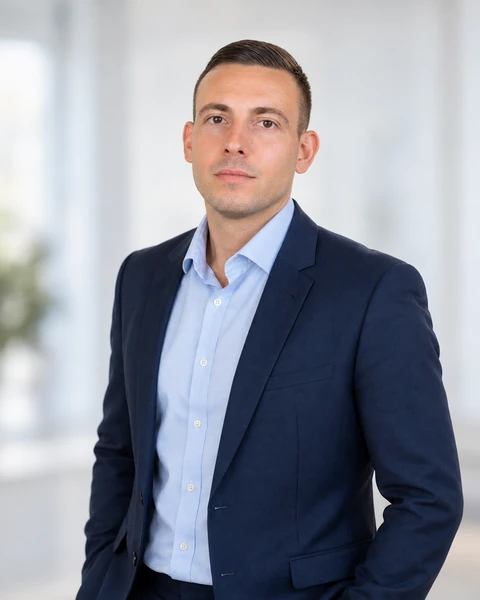
Igor Pavlovic is a fiduciary and auditor in Lucerne, Switzerland. He advises business owners and wealthy private individuals on tax, succession and audit, including cross-border matters.